


When the S*#T Hits the Fan: Why Basics Matter in Retriever Training
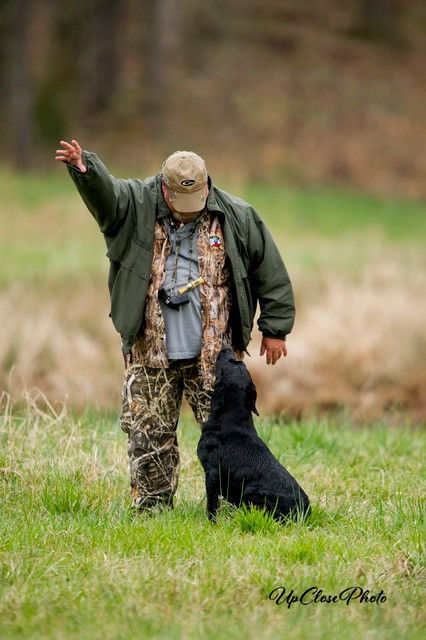
One thing I know for sure, when you see good basics, it almost goes unnoticed.
But when you see weak basics, the contrast is glaring.
Training Basics: What You Don’t See
When a dog and handler go through a setup and everything looks smooth, it’s easy to overlook what really went into that effort.
That doesn’t mean it was perfect.
The dog may have popped halfway on a blind. Maybe they slipped a whistle. Maybe there was a nick or two.
But the dog remained poised. They worked through it and got the job done.
Then the next blind goes clean. No drama. Just another training day.
What most people don’t appreciate is the preparation behind that outcome.
When Training Breaks Down
Now let’s look at the other side.
The dog pops. Handler says, “Back.” Dog pops again. “Back,” with a nick.
Now the dog gets rattled and starts coming in.
You try to stop them. No response. Another whistle. Another nick. Now they’re coming faster.
Next thing you know, they’re at your feet.
You try to send them again… nothing.
At that point, you’re totally frustrated and you just put the dog up.
And what do most people say?
“I can’t use the e-collar on my dog. They shut down.”
E-Collar Training and the Importance of Proper Basics
You’re partly right.
You can’t use the e-collar, or any form of discipline, without proper preparation.
Your basics have to hold up when things get uncomfortable. Otherwise, they’re not basics… they’re just half-hearted rehearsals.
Most people don’t proof their work adequately.
When I hear, “Basics went smooth. I didn’t have any problems,” that’s usually the problem.
They were never tested under real challenges.
Because when the rules of retrieving get challenged, weak spots don’t hide. They show up.
How to Build Solid Retriever Training Fundamentals
I’m not talking about adding more pressure.
I’m talking about building a process where those moments happen on purpose during basics, so the dog learns how to respond before it really matters.
And when they struggle, you don’t push forward… you back up and clean it up.
That’s how you build something that gets stronger over time.
Training Example: Pile Work and “Shopping”
You’re working pile work. Things are going smoothly. You’ve even forced a little on “Back.”
Then your dog starts shopping.
He picks one bumper up… drops it… grabs another.
Is it a big deal?
Not really.
But it’s an opportunity.
Because one of the rules of retrieving is simple:
Pick it up, and come straight back.
So you call “Here” and reinforce it.
The dog comes in without a bumper.
Now you’ve got a moment.
You say “Fetch”… and they won’t go back.
Why?
Because in their mind, they got in trouble at the pile.
That’s where the work begins.
Fixing Training Problems Through Simplicity
You move up. Simplify. Do some walking fetch with one bumper.
Then you start working your way back.
You may get a refusal.
You say “Fetch”… nick… the dog responds.
Again. Cleaner this time.
Then they go back to the pile, pick one up, and come in.
“Good dog.”
Building Confidence and Consistency
Next day, you revisit it.
You start moving back again.
Dog starts shopping. “Here,” with a nick. They start coming in without it.
Hand goes up. “Back,” with a nick.
This time they turn, grab a bumper, and come hard.
Now you’ve got something.
A couple more sends. No issues.
“Atta boy.”
That’s where confidence comes from.
That’s where understanding gets built.
Why Attention to Detail Matters
It’s this kind of attention to detail, right there in those moments, that prepares you for what’s coming later.
Those are the reps nobody sees. I call them unseen hours.
Those are the reinforcements that make sense to the dog.
That’s what builds a foundation you can rely on when the you-know what hits the fan!
When the S#&T Hits the Fan in Training
Because sooner or later, when the shit hits the fan… the rules get tested.
And that’s when you find out if your basics are real… or not.
Why Strong Fundamentals Matter in Competitive Dog Training
That’s something I’ve been thinking a lot about lately:
the importance of doing the basics the right way the first time.
Not just getting through them… but actually building something that holds up when it matters.
Over the next few weeks, I’m going to dig deeper into what that really looks like and how to approach it in a way that makes sense for both you and your dog.
The Bombproof Basics course is opening back up in mid-May, and I’m putting together a workshop where we’ll walk through these concepts in more detail.
Keep an eye on your email for registration and more information.
Happy Training
Pat Burns
Pat, Jim Martin from Oregon here. I have been training Labs for 55 years and have always done my own basics with good success in hunting and dog games. However, I have always been hungry to learn more so I joined your Bombproof Basics program for my latest and last puppy. I have learned so much that I didn’t know. The single most important thing is the importance of embracing problems rather than attempting to avoid them. How to clean up problems rather than putting them off until they became so big that they can no longer be ignored! This attitude is so basic and important it cannot be overstated! My puppy and I look for small problems to…